
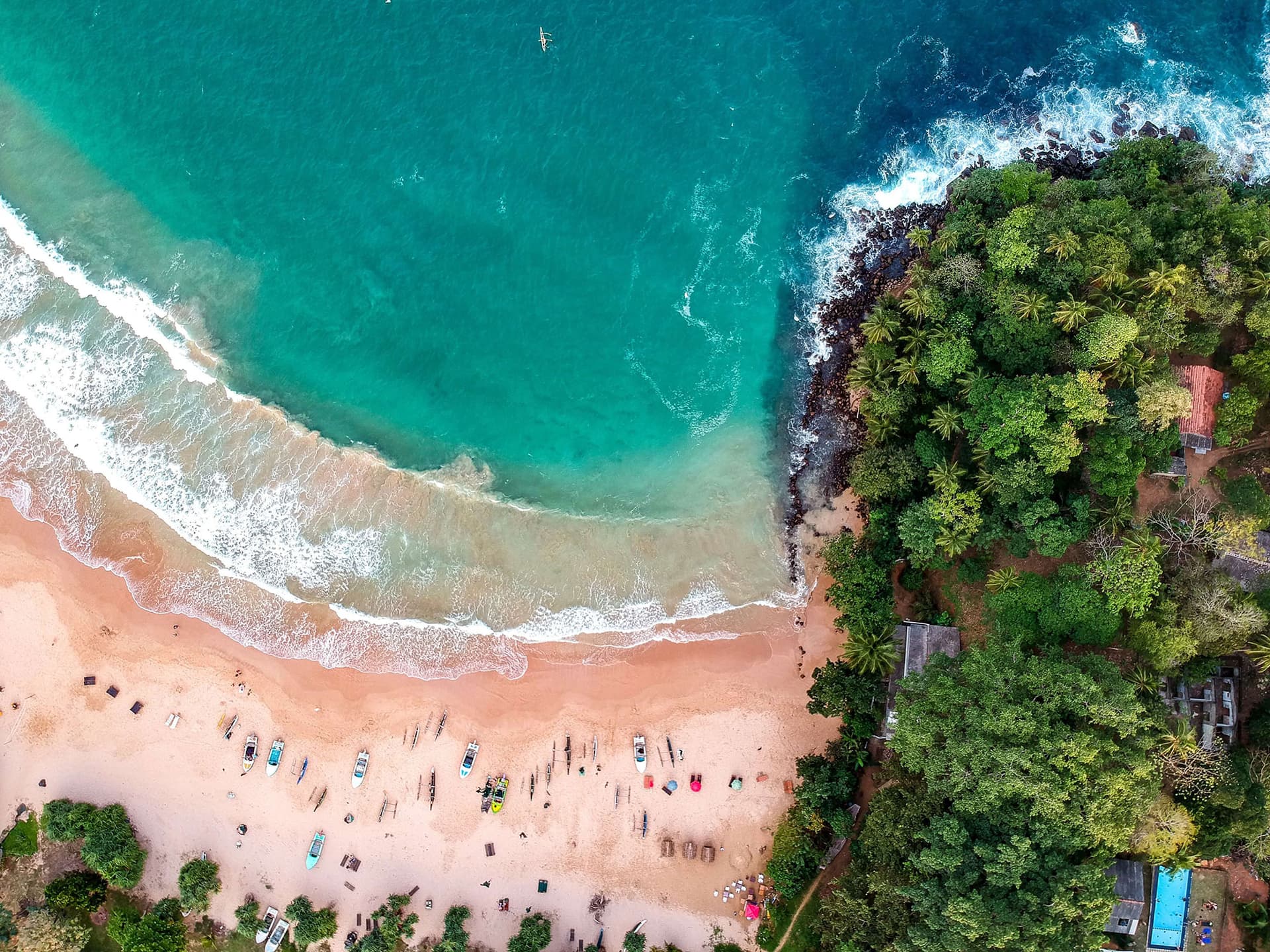
Sri Lanka's weather is governed by two monsoon systems, and there is no single "best month" for the whole island — only different regions that shine at different times. The key principle to understand: Sri Lanka's west/south coasts and the east/north coasts have completely opposite seasonal patterns. Plan around where you want to go.
Understanding Sri Lanka's Two Monsoons
| Monsoon | Period | Affects | Best Alternative During This Time |
|---|---|---|---|
| Southwest (Yala) | May–September | West coast, south coast, hill country | East coast (Trincomalee, Arugam Bay, Batticaloa) |
| Northeast (Maha) | October–January | North coast, east coast | West coast, south coast, Galle, Mirissa |
The central hill country (Kandy, Nuwara Eliya, Ella) receives rainfall from both monsoons year-round but is rarely completely rained out. The Cultural Triangle (Sigiriya, Dambulla, Anuradhapura) sits in a drier inland zone and is excellent almost year-round.
December – February: Peak Season
This is the prime time to visit Sri Lanka's famous south and west coasts. Galle, Mirissa, Unawatuna, Hikkaduwa, and Negombo enjoy clear skies, low humidity (24–28°C), and calm seas ideal for swimming, snorkelling, and whale watching. The Kandy and Sigiriya areas are equally excellent during these months.
March – April: Late Peak / Transitional
March remains excellent — the south coast is at its warmest (sea temperature 28–30°C) and crowds thin compared to December–January. April sees Sri Lankan New Year on the 13th–14th and marks the start of the transitional period. The southwest monsoon can arrive as early as late April, making weather unpredictable on the south coast.
May – September: East Coast Season
The southwest monsoon brings rain to the west and south, but the east coast becomes pristine. Trincomalee has one of Asia's finest natural harbours with exceptional visibility for diving July–September. Arugam Bay is world-famous for surfing, with the point break at its best May–October. Inland, Sigiriya and the Cultural Triangle remain dry and accessible.
October – November: Transitional Season
Inter-monsoon months with short intense rain showers island-wide but rarely all-day rain. Waterfalls (Dunhinda, Diyaluma, Ramboda) are at their most dramatic. Yala National Park reopens in October with lush post-rain vegetation. November sees whale watching resume at Mirissa, marking the start of the high season.
Best Time for Specific Activities
| Activity | Best Months | Location |
|---|---|---|
| Whale watching | November–April (peak: Jan–Mar) | Mirissa Harbour |
| Beach holiday (south/west) | November–April | Mirissa, Galle, Unawatuna, Hikkaduwa |
| Surfing (beginners) | November–April | Weligama, Mirissa |
| Surfing (advanced) | May–October | Arugam Bay, Pottuvil Point |
| Safari: Yala leopards | February–July | Yala Block I |
| Elephant gathering | July–October | Minneriya, Kaudulla |
| Tea country hiking | January–April, August–September | Ella, Nuwara Eliya |
| Kandy Esala Perahera | July–August (dates vary) | Kandy |
| Diving / snorkelling | Nov–Apr (SW) / May–Oct (NE) | Hikkaduwa / Trincomalee |
Regional Best-Month Summary
| Region | Best Months | Avoid |
|---|---|---|
| South Coast (Galle, Mirissa, Unawatuna) | November–April | May–September |
| West Coast (Colombo, Negombo, Bentota) | November–April | May–September |
| East Coast (Trincomalee, Arugam Bay) | May–September | October–January |
| Cultural Triangle (Sigiriya, Dambulla) | January–April, June–September | October–December (wetter) |
| Hill Country (Kandy, Ella, Nuwara Eliya) | January–April, August–September | May–July (wetter) |
| North Sri Lanka (Jaffna) | February–September | October–January |